
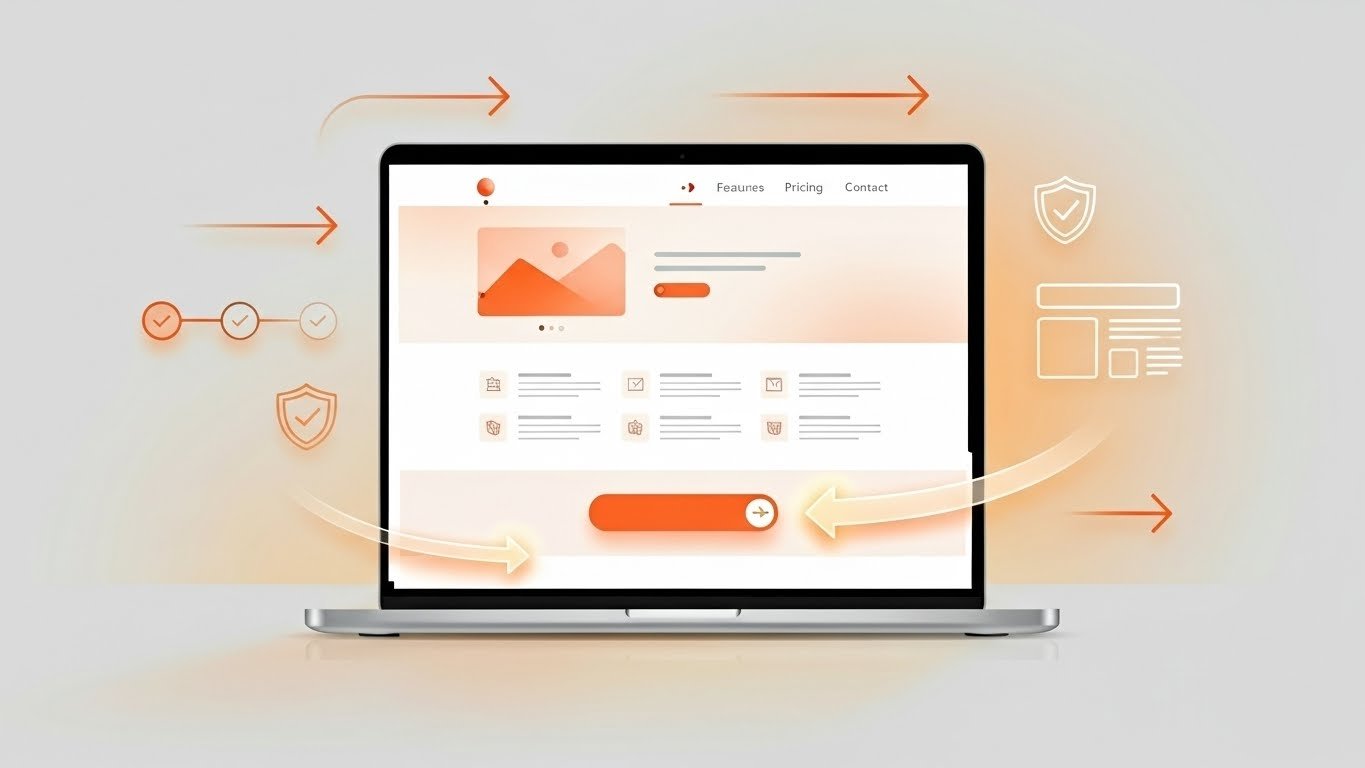
Most businesses underestimate how quickly a visitor decides whether to stay on their website. It rarely takes more than a few seconds. People arrive with a purpose, they scan for clarity, and they follow the path that feels the easiest. If your homepage doesn’t guide them, they won’t look for answers — they’ll leave quietly.
A high-performing homepage isn’t built on decoration or complexity. It’s built on structure, intention, and trust. A strong homepage should give visitors exactly what they need: a clear understanding of what you do, why it matters, and what they should do next. When your layout removes confusion, conversions naturally rise.
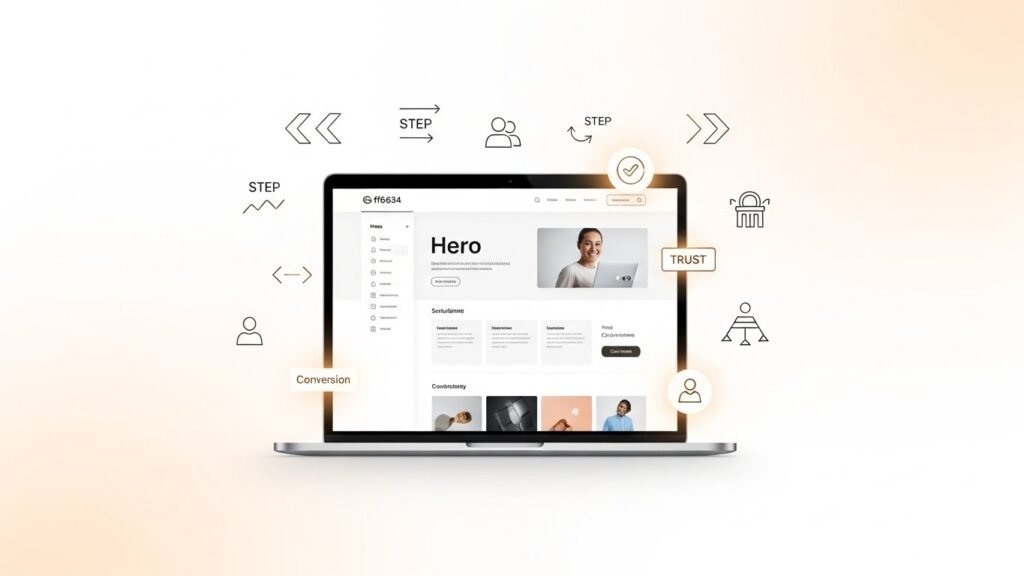
Why Your Homepage Matters More Than You Think
Your homepage is the first handshake. It sets expectations, shapes first impressions, and determines how visitors feel about your business within seconds. A modern homepage isn’t a gallery of information or a collection of sections; it’s a guided conversation.
Its purpose is simple:
- Explain what you offer.
- Show who it’s for.
- Build instant credibility.
- Lead visitors toward the next step.
When your message is clear, the decision-making becomes easy. When your homepage feels busy, confusing, or unclear, visitors hesitate — and hesitation kills conversions. The homepages that perform best are the ones that make life easier for the visitor, not the ones trying to impress them the most.
The First Viewport: Your Most Valuable Real Estate
Before a visitor scrolls, they’re looking for quick answers:
“What do you do?”
“Is this for me?”
“Can I trust you?”
“Where should I go next?”
The top section of your homepage — the first viewport — determines whether they stay long enough to find those answers.
A strong first viewport uses a clear headline, a short supporting sentence, a primary CTA, and subtle trust signals such as client logos or a credibility line. It doesn’t overwhelm the visitor with options or visuals; it simply gives direction. When this first moment feels clean and confident, people continue exploring. When it feels busy or confusing, they leave — even if the rest of your website is well designed.
A Homepage Structure That Helps Visitors Make Decisions
After the first impression is set, your homepage should guide visitors through a logical, intentional flow. People don’t want to work to understand your business — they want the website to guide them naturally. A balanced structure gives them clarity without creating information overload.
Most high-converting homepages include a few essential elements, arranged in the right order:
A Clear Value Proposition
A simple explanation of what you do, who you help, and why it matters. This is where visitors quickly decide if your business is relevant to their needs.
A Simple Snapshot of Your Services
People want to understand their options at a glance. Short service cards or brief summaries are enough to show what you offer without slowing the visitor down.
Social Proof That Builds Confidence
Testimonials, results, client logos, or short case studies reassure visitors that others have trusted you before. Even a small amount of proof significantly improves trust and conversions.
A Short Section Explaining Why You’re the Right Choice
This isn’t about bragging — it’s about clarity. A few thoughtful points about your process, experience, or approach help visitors feel confident moving forward.
A Clean, Confident CTA
The ending of your homepage should guide visitors to the next step in a simple, nonpushy way. Whether it’s viewing your portfolio, exploring services, or booking a call, clarity is what matters most.
Together, these elements create a guided path: understand → trust → decide.
The Psychology Behind Strong Homepage Flow
Visitors don’t explore websites the way we imagine. They scan for meaning, test for clarity, and skip anything that feels heavy or hard to interpret. A modern homepage converts better when it respects how people think and behave.
A few principles make the difference:
- Clarity feels trustworthy. Simple headlines and clean layouts reduce friction.
- Whitespace creates comfort. A spacious layout feels more premium and more credible.
- Order matters. People expect information to follow a natural, guided sequence.
- Consistency builds confidence. When visuals feel aligned, the business feels more reliable.
- Less choice = easier decisions. Too many options cause hesitation; clear direction creates action.
When your homepage respects these psychological patterns, it becomes more than an introduction — it becomes a tool that silently supports your business.
Avoiding Common Homepage Mistakes
Many homepages fail not because the business is weak, but because the page demands too much from the visitor. Overcrowded hero sections, unclear headings, weak navigation, inconsistent design, and lack of social proof all create friction.
The biggest issue, however, is trying to say everything at once. A homepage is not the place to explain every detail. Its job is to direct people, not overwhelm them. When you simplify the message, improve the structure, and create a calm reading experience, visitors naturally stay longer — and convert more often.
A Simple Formula That Works Every Time
Here is the structure that consistently brings clarity and results:
Hero → Value Proposition → Services → Social Proof → About → CTA
It’s predictable, strategic, and easy to navigate. Most importantly, it mirrors how people make decisions online:
understand the offer → verify trust → evaluate fit → take action.
A homepage doesn’t need complexity to be effective. It simply needs intentional design.
Final Thoughts
Your homepage is one of the most important parts of your online presence. It sets expectations, shapes first impressions, and influences whether someone becomes a customer or disappears forever. When the structure is intentional and the design is clear, your homepage becomes more than a digital introduction — it becomes a quiet, effective salesperson working for you every day.
Work With Adra Creative
A well-structured homepage isn’t just a design choice — it’s the foundation of how your business communicates online. When clarity, trust, and guidance are built into the layout, visitors feel more confident, stay longer, and take the right actions. This doesn’t happen by accident; it happens when every part of the website is created with intention.
At Adra Creative, this is how we approach every website we build. We care about the message, the flow, the visitor experience, and the business outcome — not just the visuals. If you want a modern website that reflects your value clearly and guides visitors with confidence, we’d be happy to help.

